Freezing Hip-Hip History Through the Lens
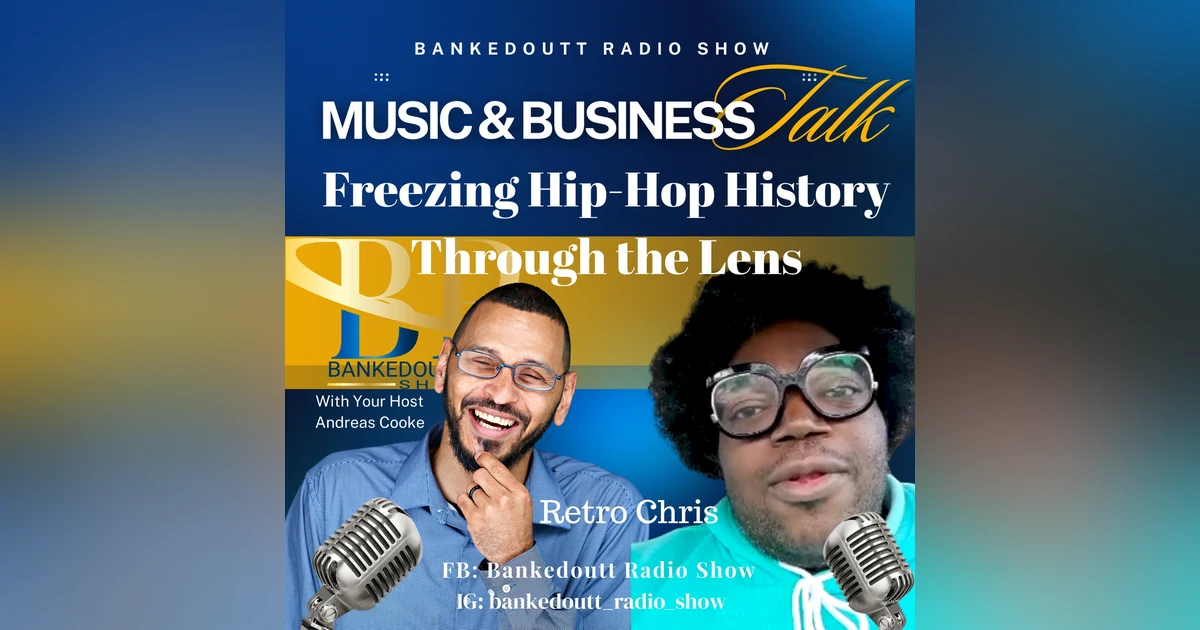
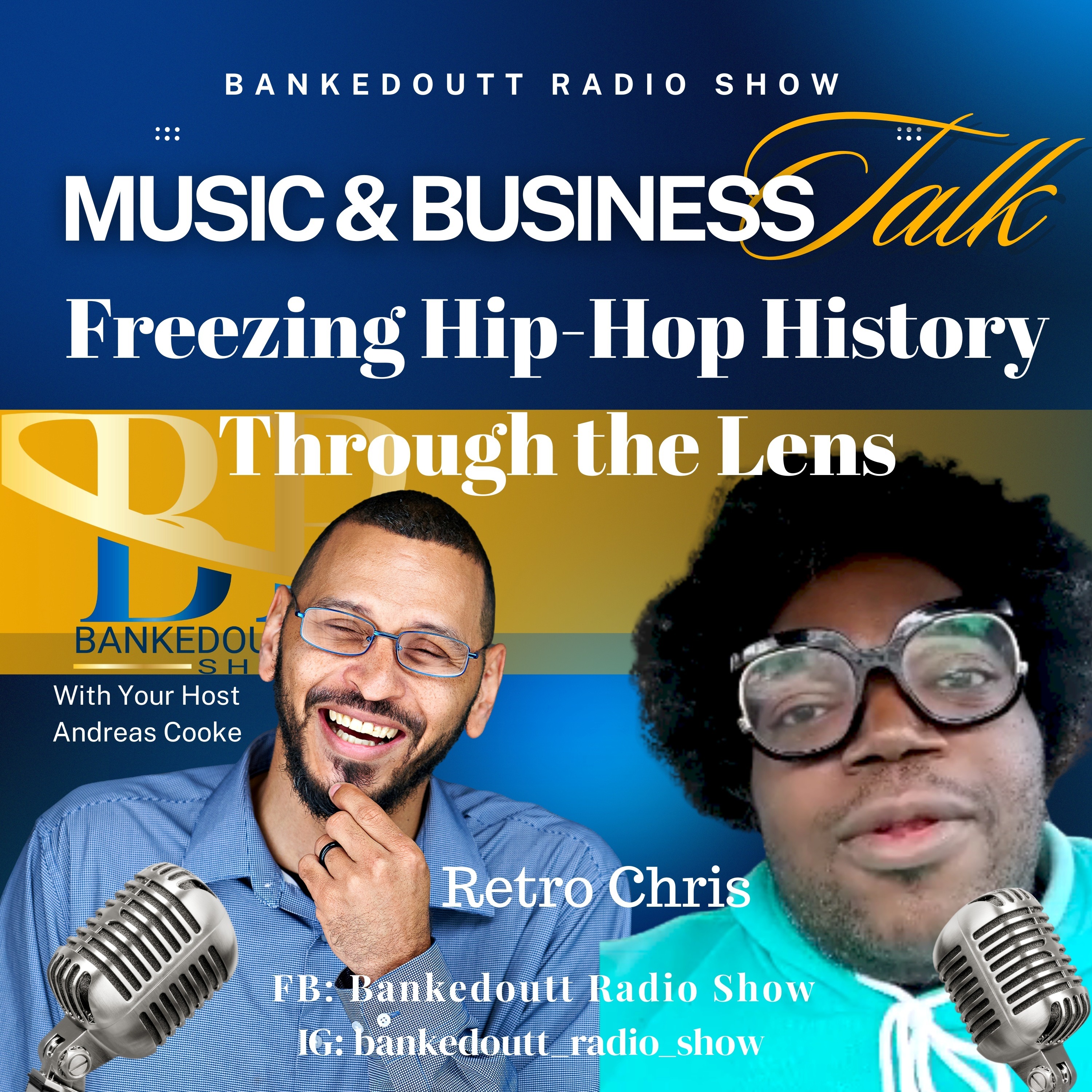


RetroChris didn’t wait for permission or connections. After receiving his first camera as a kid, he started cold-calling his way into event photography with nothing but confidence and curiosity. That relentless grind led him from small events to capturing iconic moments with major celebrities in hip-hop culture.
https://payhip.com/b/JGbr4 EBook-Podcasting
Those moments eventually became a powerful hip-hop photo book, turning his lens into a time capsule of culture. But the journey wasn’t just about creativity—it was about learning the business of photography and knowing his worth. Tune in as we break down RetroChris’ rise, his creative evolution, and how he continues to sharpen his craft.
https://www.instagram.com/retrochrismedia/
https://www.instagram.com/bankedoutt_radio_show/
Sig up to get your podcast website streamlined https://www.musicandbusinesstalk.com/podpage
0:00 From underground events to celebrity moments, Rachel Chris reveals how his camera became a time capsule for hip hop culture. Rachel Chris didn't wait for permission or connections. He started cold calling his way into event photography with nothing but confidence and curiosity. That relentless grind led him from small events to capturing iconic moments with major celebrities in hip hop. Those moments eventually became a powerful hip hop photo book, turning his lens into a time capsule of culture. But the journey wasn't just about creativity. It was about learning the business of photography and knowing its worth. Tune in as we break down Retro Chris's rise, his creative evolution, and how he continues to sharpen his craft. Hey y 'all, we're tuning in for another episode of Bakedoutt Radio Show.
0:55 This is Music and Business Talk, and today I have a special guest. So everybody out there, if you've ever thought about, you know, merging photography and hip hop, well, look no further. We have Rachel Chris on with us right now. Chris, appreciate you, you know what I'm saying, taking the day out of your time to come onto the platform. Definitely. I appreciate you guys having me. You're welcome. So I met a racial Chris at a was it Georgia Spartans game in Atlanta Yep, and he was out there one has an eye for a photography, but then also capturing in documenting Hip -hop actually like the fact that you put on your Instagram handle. Let me make sure you put Digital RS storyteller photographer time traveler which I thought that is actually I would see someone use that like moniker, but it actually fits. And he's like, you know, the page is a time capsule preserving past memories and events. So, Chris, what actually got you into wanting to be a photographer? Actually, me and the passion of photography started when I was a kid. I got my first Kodak camera when I was like two or three years old. That basically was like one of those cameras where you would shoot and then we just print out the photos right then and there. So after that, I just always wanted to either do photos or I wanted to do
2:27 video. By the age of five, I had a video camera where I could actually record live videos and everything, which was great for me. And it kind of just continued as I got older. Even the whole digital art thing, I started small at like Kind of manipulation editing software when I was a kid. Yeah, so yeah, everything started from when I was a kid and Just wanting to capture those memories and kind of preserve that time for the future basically So then where did you or when did you blend your skills as a photographer?
3:15 to capture hip hop moments and documenting it, making sure that as they kept growing as a genre, that there would be something there that people can go back to. When did that start for you? That actually started in 2014. And 2014, see, I had been shooting pictures, but I was shooting with my cell phone. So I got my first credit card. I was like, OK, this is what you're going to do. You're going to go. You're going to use your credit card limit. and going to use that to get a professional camera. So I took my credit card limit, I got my professional camera, and the first thing I covered when I started was like a little scrappy show. And I kind of did like BTS and videos for it. Like get behind there because at this point, are you a known photographer in Atlanta area or like, how did you even do that? At this point, I was So far from now, I didn't even know who I was at the time. I was still like, okay, you got the camera. So do something with the camera. So I was that phase, but I saw like a posting that they needed like production for the show. So I reached out to the production manager who at the time was Faith. And I just told her I really wanted to do like photography or videos for the production. So I would be there
4:48 whenever she needed. And that's how I started. Was this a, I guess, like an internship type of service where is it you paid or was it non -paid? It was like paid, but it wasn't paid like a lot. So it was pretty much. pay internship type service. So learning as you go? Yeah. I actually kind of put myself into by like just reaching out. So then what happens after that moment then? So as you're doing that, like, was that a one off thing for you? Was it a multitude of, you know, following, you know, multiple dates? So after I did that, I ended up working with that production for about three, four months and During that time, I'm also scouting other opportunities. I get the chance to do my first fashion photo shoot. I get a chance to cover some concerts, which is really great. And it was just a multitude of different opportunities coming in, in addition to that. So it was like, I'm only a few months in. but I'm finding my footing. Like my next big event after that was like T .I. It was a T .I. and a Young Thug video release party, which was really, really cool.
6:15 And it was funny because I was taking pictures of T .I. and Young Thug. I had no clue who Young Thug was. I just knew I was there taking pictures. But the funniest part about the event, and it was also embarrassing. I had been around TI many times, but I never actually verbally spoke to TI. So my introduction to TI was him coming up to me and saying, hey, big dog. He tapped me on the shoulder. He's like, you know, you're blocking the crowd. They can't see you because you're in the way. It was so embarrassing to me. I'm going to take photos, but. I had no clue what I was doing because I was like so new to that industry. So he's basically saying get out the way. You're blocking everybody. Nobody can see because of you. So what did you learn from that as far as like you know angles and lenses and stuff and still being able to capture the image that you want at the angle that you want but also sort of like being an incognito type of situation? I learned for one to always pay attention to your surroundings. and make sure that you're not in anyone's way because that can create either aggravation or it can create a malfunction on the whole set. So now a lot of times when I'm at like an event like that, I'll kind of like position myself to where I'm
7:47 stooping on the ground. That way no one's being blocked. Nobody is like, I'm not in anyone's way basically. that's very important, especially as a photographer. You don't want someone saying, oh, I paid like $300 for these tickets and I can't see because you're in my way. That's the worst thing ever. Are you, with events like that, are you able to get the actual angle that you want due to everything going on? Most of the time I am, but there have been like different, So for instance, there are different outlets to which I have acquired some of the shots through.
8:33 So since if you're doing media, when you're doing media, sometimes you have a more limited space and spectrum to which you can do things. So let's just say I had a Drake show. That was my first. One of the first events, big, big events that I was approved for when it comes to media. So the Drake show, we were positioned a long way away from the stage. We had to sit in the bleachers and we only had five songs, three songs that we could cover before we had to leave. So this being my first time doing that, it was really difficult because for the first two songs, Drake was in complete darkness. Then on top of that, we were far away. So I'm like relying on a zoom lens to actually capture the shot. So that was one of my most challenging big events. And the first time I was doing like an arena where I had to get approved through press. But I managed to get like maybe three or four good shots out of that. Go ahead. But they still weren't the shots that I would necessarily want to have.
9:53 So ideally, what lens did you want to use at the time? And what did you actually have at your disposal? At the time, I had a 75 to 200. If I were doing that in this day and age, I would use a 200 to 600. Yeah. Yeah. Yeah. I'm sorry. No, no, no, go ahead. I still managed to get some really good shots, but if I could do it all over again, I would do it completely different. Do you think, so as you're doing, we'll go here then I'll ask that question in a moment. So as you're doing these events and you're learning, are people like referring you to new jobs? And that's how your work is coming in or you're able to post that work that you do as well. Because, you know, sometimes they want, you know, I'm saying photographers to give up the, you know, pictures, you know, rights to them and not to post them anywhere. They do. Thankfully, I haven't really had that issue per se. Like I'm really able to still post like the pictures I have.
11:00 It's been a few clients where I do have to give up the pictures. But for the most part, like my big stuff. haven't had to yet of course it will come to a point where that happens but a lot of the gigs I get are usually from word word of mouth also a lot of people seeing like my photography book they're like oh wow okay so you do this and it kind of people by surprise because a lot of people aren't used to seeing books in this day and age No, they're not and then the fact that you've been able to put a collection together like that, which is very impressive When people hire you or the public do they understand like, you know as a photographer and videographers We have to be in certain positions And if they don't give you like all the details and you got to break out a new lens and then the fact that you know I'm saying you have to buy these expensive lenses. Are they understanding that or is there like, you know, I'm saying some like a communication in that area? It can be a like communication like um a lot of times with events um everything is go go go go go like um a lot of times you're just expected to know what to do like literally um if i could describe my whole career i would say i always had to make something out of nothing and usually anytime
12:32 i get comfortable things change. So for instance, I might do one event and the first, I want to say the first hour, the first 30 minutes is the most stressful because you're trying to figure out what to do, how to do it, what works. It's like that every time, unfortunately. Like you conquer one beast and then the next time you come back, there's usually another beast. unless it's um especially if it's a live event yeah like what um well you're a bit where you're like capturing like behind the scenes like if it's like a set that's already prepared like a music video it's not bad because you're just capturing what's in front of you yeah but for other things even like um red carpets or anything like that.
13:31 Everything is like go, go, go. And if you don't move or go fast enough, you can drown really quickly. Yeah. So what are your favorite type of events to cover then? Do you like the music videos or the live events or the red carpets better or the photo shoots behind the scenes or whatever the case may be or performances? What do you like to shoot? If I had to choose, it would be concerts and behind the scenes, like music videos and stuff like that. I like those the most. I also like photo shoots too, like one -on -one photo shoots, depending on if it's like a lot of people though. If it's a lot of people at once, it can get a little chaotic, but it's nothing. You can't necessarily handle, but if I had to choose, I would always probably do like set photography or concert photography just because you're there. But a lot of times that artist isn't really thinking about you being there. You're almost invisible for everything that you need to capture. And that's it. You just come back with some great content. And a lot of times the artists will be like, wow, I didn't even know this was happening. Just because they're in their world. They're trying to undo their performance. They're trying to get everything
15:02 right. But I'm in my world. I'm in the world of capturing everything to make sure it looks good. So I would definitely say that's my favorite. Those two are my favorites. So as far as your services, which seems to be your bread and butter right now? Are you always constantly booked for like events or do you have people hitting you up wanting to do like, you know, regular photo shoots and things of that nature? Right now, my bread and butter is mostly photo shoots. Like I do like headshots and I do some events as well.
15:43 That's literally like my bread and butter. shoes, headshots, clothing line shoots. That's what I get the most responses or inquiries about doing. Have you done like the themed photo shoots where like, you know, let's say someone's graduating or people are doing like holiday pictures and stuff like that, but they also have like a certain theme with them? Oh, yeah, I definitely have. Like, I've done that also. ones where they're styled and everything. I've done a lot of those. Are you responsible for coming up with the concept or do they bring those to you? It's a bit of both. Lately they've been bringing me the concepts.
16:30 But in the past, another thing I did with a lot of photo shoots is I used to do some styling. It's mostly for males. Like I would style, bring the clothes. Kind of everything kind of figure out the concept for them if they requested that. Okay. That makes it easier. You know what I'm saying? Your photography is also style and stuff. So, you know, I definitely understand that. That's a skill set that I don't think a lot of photographers have. So what made you want to put together the photo book and to like, you know, really highlight hip hop in its growth? I actually, as crazy as it sounds, I've been doing photo books since 2015 and I've had so many different ones. Like at one point I just put everything together.
17:16 I put fashion and hip hop. and lifestyle altogether one. I really started doing like the hip hop though. I did that initially in 2021. And initially I did it because I was, as crazy as it is, I was kind of like thinking about letting go of hip hop photography. So I wanted it to be like, kind of a obituary for every, horrible way of saying it, for every hip hop. photography event because a lot of times I was having it to a point where I would go to events. Sometimes people would talk about shooting or it was violence going on. So I was like, oh, I'm not sure if I want to continue to do hip hop photography just because. No, I definitely understand that.
18:08 Yeah, it's like I don't want to die. Exactly. You just want to do what you love to do without all the other chaos. So when you put the book together, what was the response from the book then? Because it sounds like you did something. You was trying to do this Bon Voyage type of thing. But I feel like it pulled you back into the world. It did. People loved it. Like, people literally were like, wow. Some of the shots are like, for instance, like artists like Trouble, Take Off. Most people have died now. So it's like... I feel honored to actually have been able to capture a lot of them before that happened.
18:53 So now when people see it, they're like, wow, you were there and you were there. Even my Diddy shots, I'm so happy to have all the Diddy shots I have, even though what happened with Diddy and whatever not, because no matter what, it's still history. Diddy helped make the music industry. Yeah. Just being able to have certain shots. I'm just really thankful for because it's moments that never happen again. Yeah. Like I said, you captured in, you know, in history in the making. So it was dope. I did see a video where you're promoting the book and a big figure wasn't in it. Have you have you rectified that situation?
19:41 Are you working on a second book or any supplemental pictures to be added to the first one to like extended version or something? Yeah, I've actually I've done two different versions of the book. OK, so now I'm working on a third version and. I'm going to try to reach out a big ticket and ask him to get in that version of the book because he's like, this is the book that's about hip hop that I'm absolutely not in. I thought that was hilarious. But you know, it's an open invitation. Yeah, yeah, which I need to follow through with that because that was so hilarious. I always remember that. that one meeting, he's like, I'm absolutely not in this. I love the fact that he said it. Yeah, it's Big Tigger was one of my biggest influences growing up. Yeah, I get off school just like a wide park every time I came home. Oh, wow. So how was it like meeting him in person? And was it like a surreal moment for you? Yeah, it was like, it was really cool.
20:57 Honestly, I've been blessed to meet a whole bunch of people in person over the years. For instance, Cisco. Growing up, me and my cousin, we loved Cisco. I met him one day. This was early on in my career when I was just starting, just got my camera and all that. I do production assistant work. And basically I got this set maybe an hour before everybody. And when I got there, the makeup artist was there and Cisco was there. So Cisco came up to me, he's like, hey, what's up on Cisco?
21:43 In my head I'm like, I know who you are. But I wasn't gonna tell him that because I don't want to come off as like a groupie or anything. I just just played it calm and cool. It was like, dang. And I called my cousin. I was like, I just miss Cisco because Cisco was like fresh. So it's like different moments like that. Yeah. Yeah, I definitely understand it. So like you've had this long career and you have more to go. But what would you say would be like, you know, too big? Takeaway moments that really resonated with you. Oh That's that's yeah, that's tough cuz you've had a lot of Really think about that like oh well, one of my favorites was um, I was So I started doing boxing and when I did boxing one of the first boxers I interviewed cuz I have a boxing magazine as well with Nico Ali Wash.
22:51 And that experience for me was really cool. One of the things that happened was Flavor Flav is his godfather. So we're just chilling after the weigh -in. I'm showing Nico the pictures that I've taken of him that day. And then he says, Oh, your pictures are better than top ranked pictures. Flavor Flav looks at me and he says, Chris, I'm gonna need you not to let that slide.
23:33 What you tell him is he hired you because you're the best. Your pictures are just better than somebody else's. He hired you because you're the best. Don't ever let that slide. That was one of the funniest like one of the best Moments cuz flavor flavor is really really down to earth. It's really cool. Yeah another Moment when Nico I You have to take away if you have to be ready at all times At that time I was Basically, my friends, I had got them tickets. So I was trying to find them. So I had to do, I have to plan better for like times like that. But because I went to get them the tickets, I missed out on taking pictures of Kanye West and Michael B. Jordan. Oh, wow. Yeah. So that was like, oh, damn. Okay. So basically, two takeaways, don't undervalue yourself. The second takeaway is just be ready and don't have too many. Just, just be ready at all times because anything can happen
25:04 and make sure you have a backup plan. Oh, yeah, I've learned that with videography and, you know, production and putting stuff together. I always have a backup plan. I mean, when I was doing skits and I had wrote everything, had everything all planned out, location, all that for the actors, they're supposed to be in it canceled on that same morning. I had to replace them. Yeah. And luckily, because of networking, I was able to get other people to show up, still do the skit, put it out and get the results that it needed to get when I put it out on social media. As far as the business side of photography, how is that like, what's something that people don't realize that, you know, y 'all go through or you have to experience as photographers that, you know, they necessarily wouldn't know? Well, as photographers, a lot of people want you to do free work. Especially if you're trying to enter the industry. A lot of people, even though you're the one capturing the images and everything, they feel like you're replaceable. Like you become replaceable. You have to do a lot of work. You will get a lot of people that will just use you for what you can do in the moment. And yeah, you just have to be aware of that. And you also have to make sure that at the end of the day, you're getting what you can get from the deal.
26:37 Because a lot of people, a lot of snakes, a lot of just, I guess, unaligned energies. And that comes with, any industry you're trying to get in. Mm hmm. Like it's just a lot of opportunities, a lot of. Yeah, yeah, it's just like a lot of opportunities and that's a lot of stuff you have to do to kind of climb to the next level in the industry. So what would be typical stuff of like industry standard stuff that, you know, new photographers or someone who's wanting to transfer their skills into like, let's say the entertainment aspect of the industry with photography. Do you have to take on like a lot of jobs or that are like, you know, low pay or, you know, free or like.
27:37 If I would tell anyone something, I would tell them. Only take on a few jobs like and you're going to take on a few jobs, take on maybe two or three. Just to get your portfolio going and set yourself cheap, like into this industry with your prices. Don't undersell yourself because it's like that one saying, um, what's that saying? Um, talents. Like no talent makes money when talent doesn't work or something like that. So basically it doesn't matter your skillset. Somebody needs your services and they will pay for it.
28:35 You don't have to be perfect at what you do. You just have to work because if you never do it, you never have a chance. So it's many photographers who have never had certain experiences and aren't at certain levels, but it doesn't matter. What matters is that they actually are doing the work. So I would say do the work, do your portfolio, but don't even worry about getting a portfolio. Just more so worry about putting your pricing out there and to do the gigs and don't put people in your pricing. Like use pricing that will help you pay what you need to pay and the right customers will come along. Would you say, would you mentor someone or have you mentored anyone coming into the industry or would you have it? Yeah, I have actually done mentoring and then I would definitely.
29:43 I would. Would definitely advise that like it's okay to get a few pictures done, but just Do Have your prices set having fun. Yeah Yeah, cuz I definitely understand where people try to undervalue your skill sets and things of that nature Like how does that typically work as far as like, you know pay me to do? Are you? pay upfront with a deposit, um, to make sure you show up on location or do a lot of people try to be like, Hey, we'll pay you when you show up or after the job is done. A lot of people try to say they'll pay you after a job is done. But the correct way is to actually say, okay, well I take 50 % deposit lake. And this is like just standard because I can't show up and it's not refundable. to the deposit because even if I show up or even if you cancel, I still have some money. Because a lot of times if you don't do that, it brings a thing where people won't respect you. Oh, well, I can cancel at the last minute. It doesn't matter.
31:02 I don't have to pay them anything. And yours is not paid. probably put off other things that you could do just to get this job and not get anything. It just had a last minute cancellation. Yeah, no, definitely respect that. You know, I've always paid people a front for their price or something to deposit. And I was never a person where when I hired videographers and photographers to do stuff for me, I was never one of those people. but also uh you know my background is just business in general so I operate with a higher integrity of always wanting to be known as a person who does great business not good business but great business um I've never got over on artists when I had them perform I paid them even if they're not as known as other people I'm saying think that you know because Sometimes, you know, you run into a situation where people are, well, you're not known enough to charge, blah, blah, blah. It's not about that. It's about someone doing a job for you that's convenient and you don't know how to do it. So. I definitely go ahead. That's such you above like that. You have a high standard and that's really gay. Mm hmm. Just like that's what I believe in. You know, I believe in paying people what they're worth. I believe in not taking advantage of folks either regardless of what their entry level to
32:32 the industry is They could be the best been doing it for 20 years. I could be just starting off. I'm not gonna treat them as a type of way of where I want to take advantage because um, I just don't believe in this I think the industry can be changed all around to do more better business than what it's currently doing and what it's been doing for years it shouldn't be the status quo of people like you know wanting to get into something having a passion for it and then quitting two three years later because they keep running into like you say snakes and things of nature or people not really respecting what they do because at the end of the day someone's making it more convenient for you to be able to pull off what you're trying to do and without those people you have to do it yourself Well, if you haven't invested in the time, the equipment that it takes, knowing, you know what I'm saying, what to do with the edits, then it is what it is. What's your view take on like AI and how like a lot of people are using AI for like, you know, photos and stuff and not necessarily thinking that they should hire photographers? I'm gonna be honest. I think AI is... in a lot of ways, the heaven sent like, and I don't hold it against anyone who uses it, even for photos of themselves, because not everybody can afford to get a photographer.
34:04 Not everybody has time to get a photographer. And then I'll talk about not everybody is exceptionally good at taking pictures. Some people like the pictures that they would get from AI. would be like the best pictures of themselves. And it's not that picture doesn't look like them. It looks just like them, but they wouldn't, if they were to do like a photo shoot in real life, either they're more critical of their pictures or they prefer how they look when the pictures are AI. So I'm all for AI on several levels. Now, Of course, there are also ways that AI is like, oh, no, this is horrible. I would say some of those ways would be, for instance, when they have videos and the videos are depicting somebody in very not so good circumstances, where AI can be like, too much or it can destroy someone's life. So it's a double -edged sword to AI for me, but I for the most part find it to be an amazing tool that can be used to help you to be more effective, either in timing or in getting
35:36 things done. Yeah, I definitely look at it as a tool and as long as we treat it like that and don't rely on it too heavily, then it just is what it is. Just like money is a tool. So what's next for Retro Chris and what you want to accomplish going into 2026? Next for me is I'm really going to be doing more books on advance and stuff just to capture the moments. So for instance, like, um, I'm doing a lot of sporting events right now. Um, I'll be like documenting a lot of those or better yet, I'll be saying I'll be doing like more magazines per se with interviews on certain moments and certain events. I also will probably be doing more like art display, maybe taking on some like mentor like people I could train to do certain things and kind of like building more of a leadership role for myself. Okay. Also, in addition to the books and everything, I'm really going to create like a retro type museum.
36:52 That's for sure. One of my biggest projects right there. That's for sure. I think that'd be a cool project to undertake. And, you know, once you do that, definitely I'd like to come out and see that. So for everybody out there, they want to learn about you. They want to hire. They want to go look at your work and see what you've done, where they need to be directed to. You can find me at Retro Chris Media on Instagram. I also have a boxing platform. The platform is called Behind the Boxer magazine. And in this coming year, I'll be starting up a hip hop magazine and a basketball magazine as well under the retro. You're doing a lot of stuff, Chris. Yeah. I love it though. You know, you doing books and stuff.
37:39 It seems like that has transpired and grown because you nurtured it. And now it's blossomed into something that you never probably thought you would be doing. I didn't like, um, I remember myself as a kid, I would be trying to go meet all these people. Like I got to meet Beyonce in 1998. Destiny child, I still have an autograph to this day. So certain stuff like that. I will put in my museum. Like, yeah. That's what's up. That's what's up. So everybody out there, you have me. I go follow Rachel Chris media on Instagram and also the box. So the boxing is there a social media for that? Yeah. Or a website behind the boxer magazine on Instagram and the website is behind the boxer .com. behindtheboxer .com I definitely gonna check that out and I want to see what this hip hop and uh you said uh basketballs um yeah like um the hip hop magazine is actually it's gonna be a whole kind of like a different take it's not gonna necessarily artists won't be the forefront but the people behind the scenes and i'll put it that way that's what's up i like that it's something different yeah That's what's up. That's what's up. So y 'all make sure y 'all go and follow and y 'all can continue to always support the platform bank that radio show underscore radio bank that underscore radio underscore show on Instagram and make that radio show on Facebook as well. Chris, I appreciate you taking time out your busy day. Thank you so much.