Beats & Relationship Building
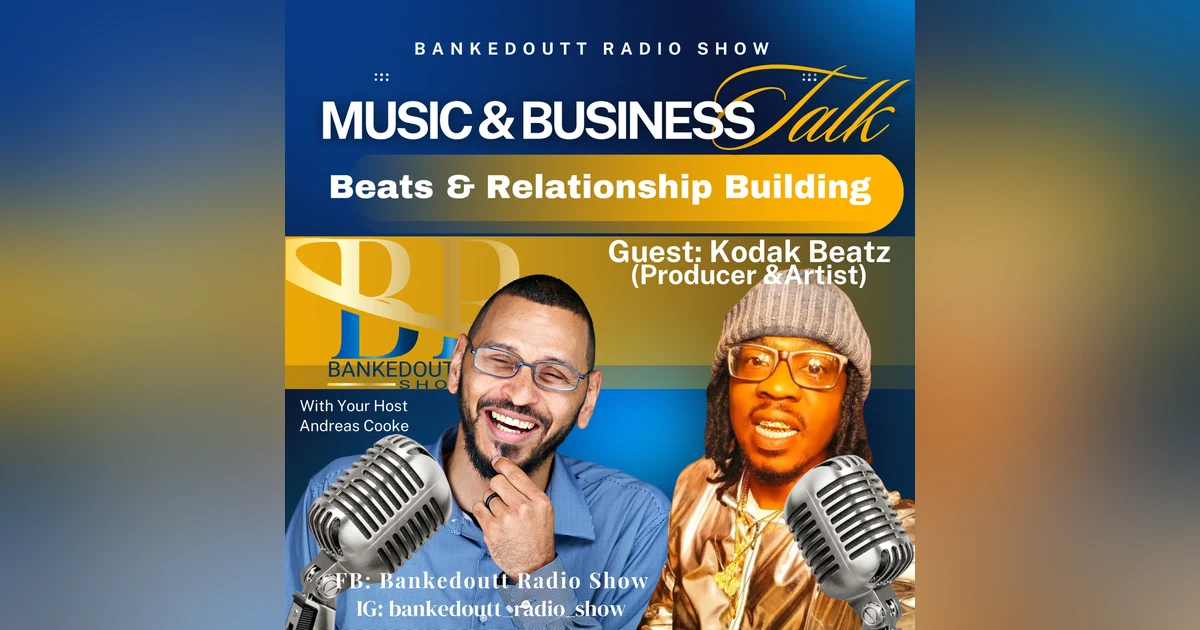
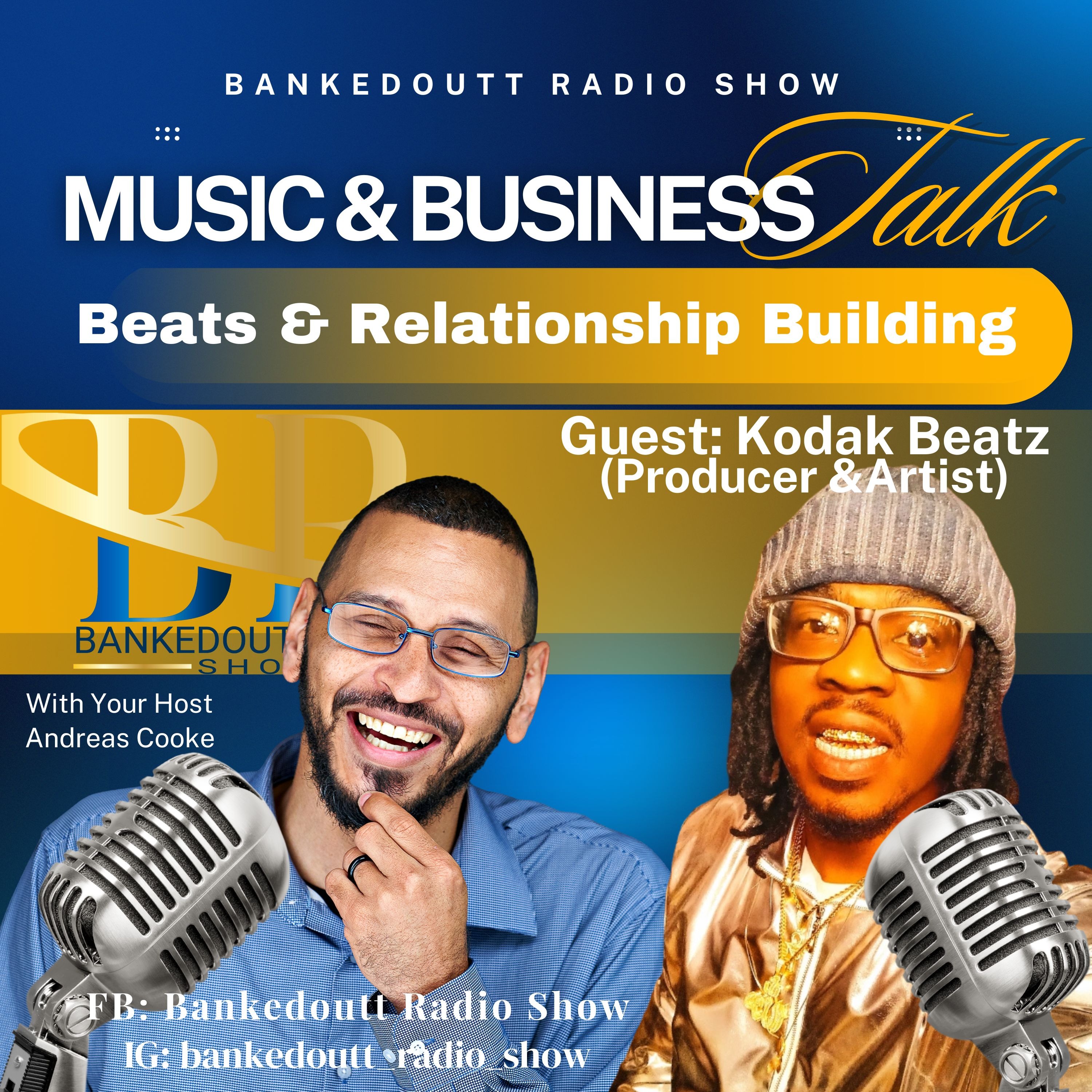


Kodak Beatz has been a driving force in the music industry for over 15 years. His dedication to soundcraft and production has opened doors to collaborations with notable names and earned him international opportunities. A staple in shaping the Wisconsin sound, Kodak Beatz has also carved out his own lane as a recording artist, adding depth to his impact on the musical landscape. In this episode, we sit down with him to explore the roots of his inspiration, the journey that shaped his career, and the vision he’s setting for the future. Tap in to learn what keeps Kodak Beatz pushing boundaries and evolving in a constantly changing industry.
Sig up to get your podcast website streamlined https://www.musicandbusinesstalk.com/podpage
0:00 I'm your host, Andreas, and I got a... Love her. I'm supposed to go to sleep, but I be all over the place, so I was like... Yeah, that's what we wanted it to be. Following up on social medias right now because... It wasn't producing a lot at the time. So just hearing about... Google and YouTube University is idealistically the best way to learn. uh reached out to me and you know we was able to set this up i can say that you know i've been listening to his music and it's very refreshing to hear people who actually know what they're doing because a lot of people thought themselves producers and stuff like that but they really haven't found their sound so welcome to the platform and to the show how you doing man for sure thank you brother Andreas man i'm doing good so let's get into you know i'm saying let's the origins of you know co -ed beats and then also you're an artist as well so like you know sum that up for us a little
1:31 bit and let us know how you got started what inspired you and how did you get to the point to where you know i'm saying you're solid with you know i'm saying your sound your signature sound well for starters i started off um doing music man when i was in the third grade playing in the marching band actually you know I used to play the snare drum the tenor drum and stuff and the bass and from there I just took it in took it with a liking and a passion from from third grade up until like middle school and high school and I was just always you know working on perfecting my craft and everything like that and it just ended up progressing for me and you know it just happened with that dedication that I put into it. So like at what point did you like really want to jump into the industry because I'm like you could have like Started making beats and they would just been for yourself. Just play around is like a hobby It's whatever but you're actually industry professional out here. So when did it hit that mile marker for you? Oh I say like when I was around like 15 or 16 years old Yeah, 15 16 that age group that's like when I really like took it serious and I was like really putting my like all of my time and my effort and my money and stuff behind it, buying equipment for producing different keyboards, you know, Yamahas. And I had the MPC archives, beat machines and all of that. You know, I was just, you know,
3:02 investing in stuff like that and just always trying to figure out how to actually become a real producer. So, you know, I was doing the research behind it with the work as far as like making beats for myself. and other artists as well. When did you sell your first beat? I sold my first beat in high school. How did that make you feel when you did that? Do you remember? Yeah, I ain't gonna lie, it actually made me feel real good. Like it made me feel like, yeah, I could actually, if I do it correctly, you know, the right way, I could probably actually make a living in the... and a real profitable career out of it. Because I actually started just selling beat CDs and stuff to just like local artists in my city here in Wisconsin. That's how I really started. Then I did the groundwork and it spread, just started spreading through the whole state of Wisconsin, spread through Illinois, through the whole Midwest and everything. And now I'm here. That's what I thought I'm like you know that's a great summary of that but I know you've had a lot of steps along the way you know I'm saying elevating and things of that nature um so then you're making beats right and you're doing the producer so when did you actually want to like actually record too? Oh um that was always I always wanted to know how to do that the same
4:36 The same as I wanted to make music and make beats because I always looked at it like a total package kind of thing Like, you know, you don't want to just know how to make beats You should also if you want to be a producer, you should also want to know how to record and mix and master and Also be able to work with different artists and different other producers as well if you if that makes sense you're developing a skill set and you're broadening, like you said, to where you can create situations where, you know, you have not all these opportunities. That way, you know what I'm saying, you can take advantage of those and be able to be known not just as a beat maker, but also as a around producer.
5:21 Right. But you're also an artist as well, correct? Correct. So when did you want to like, you know what I'm saying, get behind the mic and put out that particular type of, you know what I'm saying, style and persona? This is one thing to be a producer. It's another thing to be a recording artist and people to be known, you know what I'm saying, for your lyrics and stuff like that. And it takes on a whole other, you know, wheelhouse. Yeah. Actually, I wanted to be a rapper before I wanted to be a producer. Really? Yeah. Like I said, I was making music and stuff. since the third grade. That's when I wrote my first rap when I was in the third grade, believe it or not, though. Okay, you knew it. Yeah, I remember it. It was, you know, back then, you know, it was, it was just talking about like, uh, like school and stuff like that, you know, yeah, just little kid stuff. Kind of nasty rhyme type of things. Yeah, I just always thought, you know, it was cool. So. I imagine you drew inspiration from, you know, looking at different artists and stuff. So who are some of those inspirational artists that you were drawing, you know, your creativity from? Who do you want to like be like when you know I'm saying you was coming up and stuff like that? Oh man, like as far as like artists or producers? Yeah, both sides. Man,
6:52 I'm a big fan still to this day of producers like Zaytoven. Big shout out to him. I got a chance to work with him on a few projects. Drummer Boy. Let's see, K .E. on the track from Atlanta. He kind of like fashioned and shaped the futuristic sound for Atlanta, Georgia. That futuristic sound. You know, people like Dr. Dre. Lex Luger, Three Six Mafia, you know, that's a lot. Yeah, but I'm not, you name it, I'm kind of real versed between different music and different genres and stuff. Exactly, I'm not using names of Southern artists, you know, West artists, so I'm like, you know, you're all over the place and which is great because that versatility, you know what I'm saying, you don't put yourself in the box.
7:54 So moving forward, you've been elevating your career and you got it to the point to where it's at. How do you feel about the landscape of music? Because I imagine, you know what I'm saying, one, you work with a lot of indie artists and stuff like that. What is the landscape of music in your area and from your perception right now? How is it? It's Banked Out Radio Show and I have some deals for y 'all. There are some companies that I've been going, researching, looking at the different products and services that I want to turn you all on to. So go to my deals page, check them out. Any one of them that you want to interact with, want to do some business with, you'll get a promo discount as well when you try their product, Banked Out, B -A -N -K -E -D -O -U -T -T. Slide over to that page, check out what I have to offer, and let me know. Where do I see it being going or in the area that it's in right now? Yeah, so how do you view it right now? Is it in a good situation? Is it in a bad situation? You know what I'm saying? Is it a combination of both? Do you think, like, you know... I'll give you an example, you know what I'm saying, with mumbo rap and stuff like that, right? So that was a thing. And me, personally, as a consumer and also someone who's created music as well, I didn't really care for it. You know what I'm saying? You catch a vibe, you catch a vibe, but I didn't see it as like tying, you know what I'm saying, like classic and stuff
9:24 like that or whatever. You see what I'm saying? And some people are saying like as far as consumers that, you know, there's no soul of music anymore. It's not as much as it used to be and they miss certain eras of music. Yeah. Well, me personally, I think the state of music right now is in a good state to be honest with. you know, of course you're gonna have some music out there that probably doesn't resonate with you, but that's why it's music though, and that's why music is diverse, you know, because it's something out there for everybody, you know, and I think it's doing this thing, you know, it's a lot of new emerging artists out there are gonna come up, a lot of new emerging talent as far as producers, writers, you know, different people like that is gonna come up and with the way it is now that is so accessible on our phones via social media, laptops and stuff like that. It's like in the age of the streaming and digital platform to where it's making it more easier for consumers and creators to interact with each other as well. Yeah, I love that aspect of it. So since you mentioned, you know what I'm saying, there are a lot of emerging artists.
10:41 who's like on your radar right now that's like from the area like you know top three that you actually like listening to and you like to consume their music as a as a consumer um man i listen to a little bit everybody but i say like by the top one right now um you know i've been listening to a lot of young boy okay so a lot of nba young boy um you know i've been listening to Fat so, you know, I listen to I Listen to Maya P from she's from Milwaukee, you know, she made the song she was a fairy So she's not that far for me. So, you know, I listen to her music Listen to a little lotto listen to all types of stuff for real No, you might catch me listen to some R &B on a good day for real Hey, we go back and forth because I think you know say again music is it's about the feeling and you know what it does to you and how it makes you move, whatever, and the type of mood that you be in. So you're very talented. Like I said, I listen to your stuff. I love it. But there's also the business side of music, right? What has been your experience just overall with dealing with the business side of music? Has it been a good experience for you?
11:57 Has it been a combination of ups and downs? It's been it's been good. I have more good in it. Then I have more bad actually. Okay, cuz um It has it has its challenges here and there, you know being independent as well and then you know learning learning the The major the mainstream game and how they run it in work And then but you're still being independent while you're working with some of these majors or other independent artists, you know, it's a difference with who you're working with and how you're working with them and on what type of level you're working with them with, you know. Yeah, definitely. I say, you know, learning like the knowledge of the actual music business, like copyrights, publishers, royalties, you know, stuff like that. Getting like a BMI or or your sound exchange rights and stuff like that. I tell a lot of people to actually sit and learn that side of the business because it also secures your back ends and your money.
13:20 So is there a situation where let's say an artist comes to you and they want to record and they have not done their research or they're not affiliated with ASCAP or BMRC, right? How do you handle that situation? Do you like, hey, look, before we really get into this lab or whatever, you need to make sure you go and at least start your account. So then once we're done, you know what I'm saying, you can upload your stuff, register it, or do you just go through and be like, hey, you know what I'm saying, we got this song, now this is the next step that you need to do. Yeah, it could kind of happen either way, both ways actually with me. And, but honestly, as a producer, I always have my production split sheets for all of my songs. So that way I could keep my catalog organized and stuff. And then I also kind of like try to like develop and coach the artists that I work with as well as a music producer.
14:21 So yeah, I will give them like heads up on different game in different areas that I might see or ask them like if they know about certain things. And if they say no, I'll be like, well, you need to go to copyright .gov and register your name, register your song titles, stuff like that. Get your publishing together, create you a BMI and a CSCAP account. And get your page monetized, work to get it monetized and all of these things in different areas. Those are the main key factors that I would try to help them with. I like the fact that you're an artist and a producer. How do you balance that as far as with yourself?
15:15 You know, some moments I just go through like a writing phase. Some moments I go through a producing phase and some moments I have that phase to where I just I'm just rapping. So it's kind of like a mix, like how I'm feeling. I go off of my vibe a lot. I go off my vibe. That's kind of like how I like to do it. I like to go off my vibe more than often. So when you do like, you know what I'm saying, a creative process, even if you're producing and something needs to come out, right? What's your rollout process like, you know what I'm saying? Do you set strategy for yourself? I know some artists that just know they'll send the music to the distributor. They'll get the links so they can post them. And that's pretty much it. Or they might shoot some type of visual content or video. They don't really have a plan as far as, OK, this is what I need to do for marketing. This is how I'm going to create content. This is how I'm going to get inquirer fans. So do you have like rollout plans when you do things? Yeah, sometimes I do. Sometimes I don't. Like right now. I'm in the process of releasing a New album next month in December.
16:36 Okay, so I'm I'm actually gonna do a rollout plan for that one right there. So I'm just I don't know how I'm gonna do it right now though So it's all like stealing them in the process, but it's for sure release the next month though and With that, you know, it's just I know it's gonna be a lot of heavy promo Yeah, do you enjoy like, you know, I'm saying the promotional side because I've talked to some artists where They just so enamored with the creativity side You know when it comes to the business and the marketing and all that and doing you know Letting their personality shine and doing things that would help draw an eye to their music. They just don't really care for it Yeah Sometimes, you know the promotion can be a little overwhelming if you doing it yourself But if you have a team, I feel like, you know, I feel like that should be like just second nature to the creative process for real, the promotion. Because, you know, you can have a good song, but if you're not promoting it the right way and trying to make sure it's getting the right exposure, then it might not do anything. But it might take time because some songs might actually have to work. And over time, it'll get the traction. and then you might have some songs that get the traction when you just instantly release it. I just seem to happen different ways. Yeah. What are your goals like that you're
18:13 trying to accomplish? You know, because at this particular point, like, you know, with the career you've been having and you've been able to, like you said, where we got around, you know, throughout multiple states and things of that nature. you cultivated like a brain and awareness. So what are your goals now? Well, my goal is, you know, to continue to continue to elevate, staying dedicated, staying driven and keeping that passion and that motivation that I had since day one going and just continue to fuel that fire, you know? Yeah. To continue to get more placements. Mostly I get some Some more big radio placements or some more album placements or anything with some more mainstream artists this year in the next couple years, you know Have you ever thought about like doing movie scores and stuff? Oh Yeah, I have I actually do work with movie directors as well and I have some movie placements and in the movie franchise It's called Turn. I don't know if you've seen it. It's on Tubi. It's on Dying TV. It's on pretty much every movie streaming platform, though. But you could watch it right now. It's called Turn, T -U -R -N -T. I'm about to go check that out. And then I'll be like, OK, I'll sit there and speak to the car. They got that placement there, you know? Because it's big. Yeah, for
19:45 sure. Everybody can't sit there. They got that. So congratulations on being able to just put it in work and be able to create these opportunities like that. Do you ever think that considering your knowledge and you know what you've been able to accomplish thus far you would somewhere down the line lean into like an executive role where you're either bringing on other producers under you like signed to a production company or doing a label situation? Yeah that would actually be pretty dope actually for me man and I do have that type of thing and want to do in the future sometime. um but i i think i have to get with the with the right network of people to actually be able to put like that put something like that together and for it to be actually you know for it to actually be able to what's the word i'm looking for produce like results that you want and stuff like that yeah yeah To get the right results and the, you know. Yeah, for sure. Now I get that. Tell us about the Wisconsin music scene. I'm so interested to hear about that because I think the closest I can get is to Wisconsin, Milwaukee. And I know, is it MK? something K or something, MKB or something like that. What
21:18 is her name? It's slipping my mind right now, but I talk to her every now and then so often. But tell us about this thing. Is it a supportive, like, you know, music hub scene where, you know, independent artists, you know, like how Texas is, where, you know, a lot of indie artists, they'd be like making bank or whatever. And then, you know, out in California in the Bay Area and all that, they'd be making bank because the culture in the community are in one, they're in unison. So how is it in Wisconsin area? Pretty much, man. All the big names that you might hear coming from Wisconsin, like in the Milwaukee area, they pretty much doing that thing. And, you know, it's pretty much living up to what their name is. And, you know, it's pretty much like everybody has their own thing going on, but at the same time, they're still connected with one another.
22:18 And they're still supportive of one another as well. Where is the furthest geographical location that you've been able to collaborate with an artist? Where does that come from? In Slovakia. Really? Yes. How is this language barrier? Some speak English, some speak English and some speak Slovakian. Did it take like a long for, like how did that come about? They just like, you put your music out there and they saw it on like social media or they just happened to come across your profile or something like that? No, remember I told you I was messing, I was working with a lot, I've been working with a lot of mainstream people. So it's like different different mainstream artists Such as like Chief Keith You know, I was working with him long story short this is how the Slovakian story came about but I was working with Chief Keith and I was also working with one of his other product Producers under his production label glow gang producers, okay and his name was A Beats, and he was actually from Europe. And he was signed to Interscope Europe, Europe's branch. And we was, you know,
23:51 co -producing with each other. So he'll send me beats, I'll send him beats, and we'll send each other collaborations and work on collaborations together. and we'll talk via phone and stuff like that. Cause you know, we were, we were both young at the time. And yeah, it ended up, they got it, got it on one of their artists that was signed to Interscope Europe at the time. And it's, it took off. It's a, it's a pretty mainstream hit too. It's still, it's on YouTube right now. cover the title or something so I can go check that out. You still getting your royalties and stuff, I imagine from that. Yeah, yeah, for sure.
24:34 I got my credit, my production credits and everything from it and my royalties and everything from it, you know? Yeah, you got to send me a link or something. I want to check that out. Oh, yeah, I'll send that to you after the interview, brother. I got you for sure. I can't think of the name of the track right now because there's so many songs on my head that I didn't, you know. I could only imagine your musical catalog is crazy. Yeah. But I for sure, I'm sure we'll send it to you though. It's a whole music video to it in Slovakian language. I definitely want to check that out. So I could only imagine your catalog writing with the people selling your catalogs. What do you think about that? And you know, would you ever sell your catalog for a lump sum of money in the future? Or would you just keep everything yourself? As of right now, I don't have a need or a want to want to sell my catalog. But I heard other producers say that they have done that for like publishing checks and stuff like that.
25:43 And they got a pretty large amount of money for it. wealthy, you know, and became very wealthy from it. So I can't really knock it. But as of right now, not at the moment, not right now. That's what's up. I love it. I think that, you know, I'm not knocking those who do, but I just think at some particular point, if everybody sells, then we just lose culture all around. Right. Because whoever owned it is going to do what they want to with it. And they're not going to protect the culture of what it is. They're just looking for the bottom line. So. Right. you're a professional, what are like three things that recording artists, independent recording artists can do to better prepare when they go into the studio? Like to get the best... Have the song already worked out? Had a song already worked out, you know, had the right beat to it.
26:42 and go in there with that, with that, with that drive, that motivation, that fire, you know, go in there with that, with that, with that hunger and that passion. That's what's up. I love it. I love it. I won't take up any much more of your time because I know you got to get back to doing stuff, but let everybody know how can they reach out to you if they want to do collaborations, consultations, pick your brain, whatever the case may be, get beats, hum and record. Look up your music, whatever the case may be. Man, y 'all could look me up on YouTube, Kodak Beats. That's K -O -D -A -K -B -E -A -T -Z. The same is Kodak Beats with the number five. That's my Instagram handle. You know, I don't know. That's pretty much. That's the one right there. Exactly.
27:37 So y 'all make sure y 'all go check out Kodak Beats. on Instagram, on YouTube, and of course it's going to pop up on the screen. Y 'all keep supporting the platform, supporting everybody that we bring on, and give them a look, and you can always keep following BankedOut Underscore Radio Underscore Show on Instagram. And this has been our interview with Kodak Beats.